
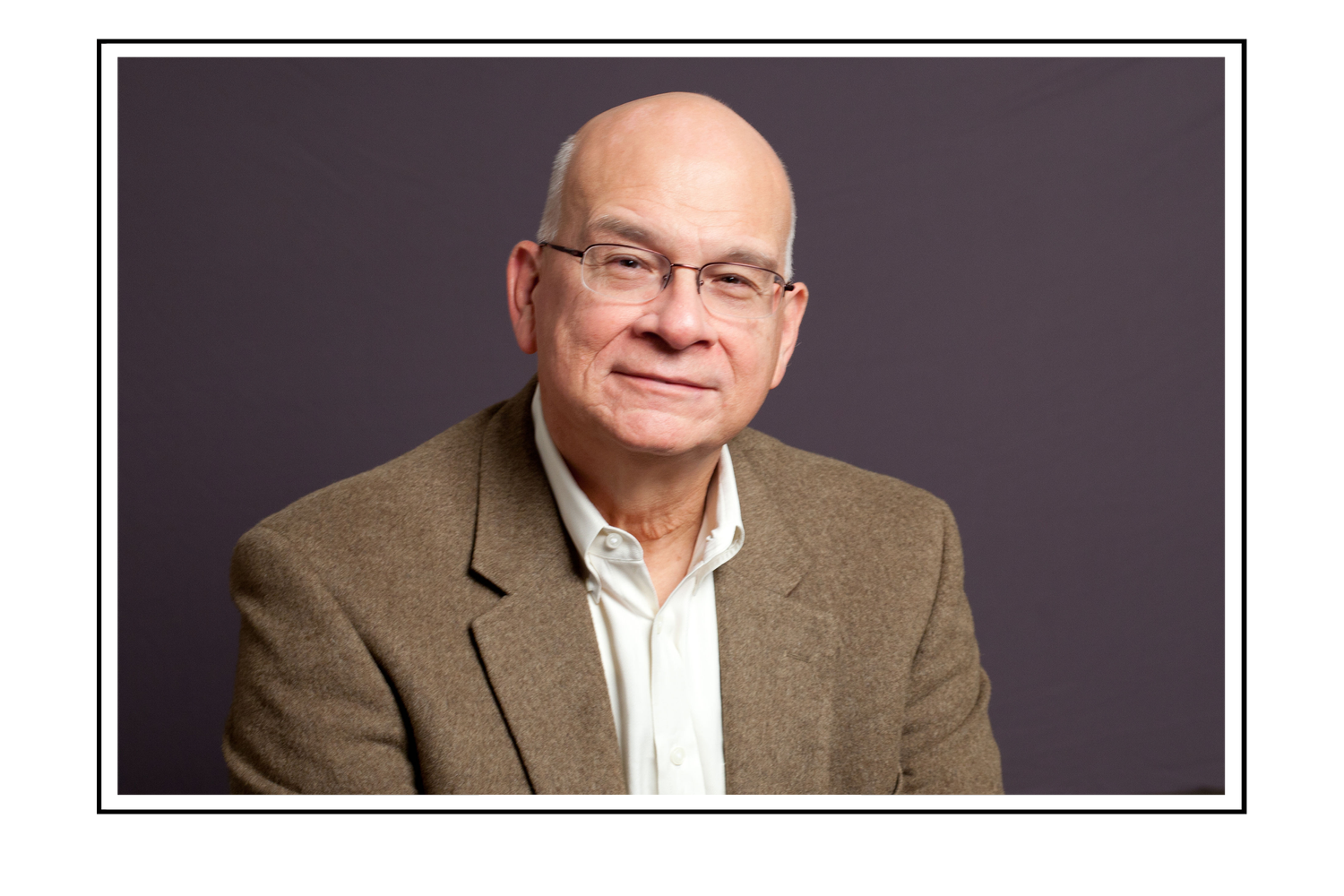
Dr. Tim Keller (Redeemer Presbyterian Church, New York City) — the most insightful and intellectually honest Bible teachers I’ve heard, deeply theological without a belittling tone to those with differing convictions. Gifted to speak in a winsome Gospel-centered way to Christians and non-Christians alike. Not afraid to read and use pop culture references. cf. Read 14 reasons why I like Keller.
[quick links] | TimothyKeller.com official website | Messages | Articles | Quotes | Texts | Excerpt 1: sun & frost | Excerpt 2: poor
Aside: this web page was the first Tim Keller website ever on the Internet, circa 2002. NOTE: this is an historical archive of a fan page
In Memory of Tim Keller (from official website) — now in the presence of the Lord Jesus | “Tim Keller, New York City Pastor Who Modeled Winsome Witness” (Christianity Today, May 19, 2023) | Special Issue: The Life and Legacy of Tim Keller (Christianity Today)
Books
- all the books by Timothy Keller (amazon.com)
- Walking with God through Pain and Suffering – August 4, 2015
- Preaching: Communicating Faith in a Skeptical Age – June 9, 2015
- Prayer: Experiencing Awe and Intimacy with God (Nov 2014)
- Encounters with Jesus: Unexpected Answers to Life’s Biggest Questions (Nov 2013)
- Every Good Endeavor: Connecting Your Work to God’s Work (Nov 2012)
- Center Church: Doing Balanced, Gospel-Centered Ministry in Your City (Sept 2012)
- The Meaning of Marriage: Facing the Complexities of Commitment with the Wisdom of God by Timothy & Kathy Keller (Nov 2011)
- King’s Cross: The Story of the World in the Life of Jesus (Feb 2011)
- Generous Justice: How God’s Grace Makes Us Just (Nov 2010)
- Counterfeit Gods: The Empty Promises of Money, Sex, and Power, and the Only Hope that Matters (Oct 2009)
- The Prodigal God: Recovering the Heart of the Christian Faith (Oct 2008)
- The Reason for God: Belief in an Age of Skepticism (Feb 2008)
- Ministries of Mercy: The Call of the Jericho Road (1997)
More about Tim Keller
 Featured in Newsweek, “The Smart Shepherd: A New York pastor who says he thinks too much wants to bring his Christian message to the world.” (2/18/08 issue; cf. Keller’s comments on this article and Ed Stetzer’s comments)
Featured in New York Times, “Clergy Again Shoulders Burdens of Consoling and Explaining” (9/11/06 memorial service; cache, sermon text) + “Preaching the Word and Quoting the Voice” (2/26/06; cached pdf; cf. disclaimer from kellered: “Redeemer does not aspire to fame. In fact, Redeemer did not want the article done but the journalist was going to do it whether or not Redeemer helped him to write it. … Redeemer is happy to fly under the radar…”)
Featured in New York Magazine’s Influentials 2006 List (5/16/06):
Rev. Timothy Keller
Redeemer Presbyterian
Keller has become the most successful Christian Evangelist in the city by recognizing what marketers have known for decades: that young professionals and artists are “disproportionately influential” in creating the country’s culture and that you have to meet this coveted demographic on its own terms. With intellectual, brimstone-free sermons that manage to cite Woody Allen alongside Matthew, Mark, Luke, and John …
Other Keller web pages:: Wikipedia entry on Tim Keller + Reformissionary’s Tim Keller Resources (via Steve McCoy) + Monergism.com links (with a kitchy caricature) + the lengthiest Keller bio to date.
Listen to Redeemer’s original vision unpacked by Tim Keller (22:00 mins, posted with permission):
Redeemer had a Vision Campaign in Fall 2005:: 7 Vision Papers, 5 vision sermons, thoughts on giving (3 talks – mp3 audios), and more. Plus, video of Redeemer’s vision for cities
Messages (hear + see Keller)
Hear Tim Keller live (besides at Redeemer) at:
- TogetherLA (Los Angeles) February 26-28, 2015 ~ Speaking at 5 main sessions!
Messages from Past Events
- Exponential Conference 2009 (April 2009) [cf. Podcast of conversation between Dave Ferguson and Tim Keller]
- Innovation3 Gathering (Jan 2009 in Dallas) [cf. notes in PDF, Turning Your Biggest Idol into Your Biggest Benefit]
- [Past events] 2 lectures on Preaching to the Heart (11/19/08, Oak Hill College, London), Q conference (4/9-11, 2008 in New York City), Exponential 08: National New Church Conference, (April 21-24, 2008 in Orlando); also, Book tour info
- Dwell Conference 2008 NYC: Dwelling in the Gospel and Persuasion
- at CityLife Church in Boston: Encounter with God (Genesis 32:22-31) + A Broken Spirit (Luke 9:51-56) [mp3 audios – 10/28/07]
- The Evangelists Conference: Smashing False Idols. 3 messages titled = Gospel Realisation, Gospel Communication, and Gospel Incarnation. (London, Oct 5-7, 2007, also at allsouls.org)
- Fulton Street Noon Prayer Meeting (New York City, Sept 21-22, 2007) – buy CDs of plenary set that includes Friday Night Plenary by Keller
- “What is an evangelical?” – buy MP3 CD of entire event (at Evangelical Ministry Assembly in London, July 2007; cf. great outline at dashhouse.com)
- What Does Gospel Centered Ministry Look Like (mp3 audio and mv4 video), The Gospel Coalition (Chicago, May 2007)
- The Blessing of Giving – buy the CD ($8) or MP3 ($2), 2007 Givers’ Conference (Generous Giving, Dallas, April 2007)
- Redeemer’s Center for Faith and Work – Entrepreneurship Forum 2007: Stewarding Our Gifts (mp3)
- Christian Life Conference (Memphis, TN; January 2007) — ; How the Cross Converts Us (Acts 8 ); How the Cross Changes Us (Romans 6); How the Cross Unites Us: how the cross affects our relationships (Ephesians 2)
- Why Justice is So Important Now [mp3], 2006 HFNY Benefit Talk (11/08/06)
- from Redeemer sermon series, The Trouble with Christianity: Why it’s so Hard to Believe it, Exclusivity: How can there be just one true religion? (9/24/06) and Suffering: If God is good, why is there so much evil in the world? (10/1/06) [mp3 audios]
- 2006 Preaching Conference: Proclaim the Truth (September 2006) Preaching Sessions ($22); and other Gordon-Conwell Seminary lectures by Keller: Preaching to the Heart ($34) and Evangelism and Church Planting in Postmodern Cities ($27)
- St. George’s-Tron Church (in Glasgow on 6/19/05) : The Prodigal Sons + Jesus, the Church and the City [this 2nd sermon begins with an 8-minute history of Redeemer; ht: valueofthekingdom]
- Desiring God national conference (Fall 2006; see photos from whatsbruin and solaluminacaptura) — [1] The Supremacy of Christ and the Gospel in a Postmodern World (mp3 audio + video + read highlights), [2] A Conversation with the Pastors: Evening Q & A (mp3 audio); also see 15 short interviews with Tim Keller: promo videos, includes 4 unreleased videos
- 6 salient sound bites excerpted from his Desiring God talks: All Theology Has To Be an Exposition of the Gospel, If You Think You Understand the Gospel, You Don’t, The Gospel Must Be Urbanized to Reach the Culture, Contextualization Makes the Gospel Plausible, We Must Confront Unbelievers with Compassion, Argue Against a False Worldview Using Its Presuppositions (mp3 audios)
- 3 videos from Reform & Resurge Conference (Seattle, May 2006):
- “A Call to the Church of Richmond” [mp3 audio] (Faith Leaders Forum in Richmond, VA; 4/18/06)
- Redeemer’s Center for Faith and Work – Entrepreneurship Forum 2006: Cultural Renewal: The Role of the Intrapreneur and the Entrepreneur (mp3) and Principles for Action [mp3]
- “Now What? Confronting Our Power” – video and audio (Veritas Forum at Harvard, Feb 2006)
- 2 audios at The Gathering 2005: Bible Teachings on Treasure and Justice; Reaching The 21st Century World For Christ [mp3 audios]
- Redeemer’s MCM 2005-2006 (Ministry Community Meeting), including: Kingdom Centered Prayer, Praying For Glory, and more [mp3 audios]
- Talks at Covenant Theological Seminary: 2004 Preaching Lectures – All Things Are Yours [mp3] + Preaching to Believers and Unbelievers [mp3]; Fall 2004 Connect Conference – Contextualizing Ministry part 1, part 2, part 3
- Significance of J.R.R. Tolkien – lecture presented at International Arts Movement (2002)
- Q&A Sessions with Tim Keller – listen to over a dozen sessions, answers to questions like: Vocation – 3 parts to discerning a call; Sexual “compatibility”; Our screw-ups and God’s Will; Tolkien’s Imagination and the Transformation of Anglo-Saxon Mythology; Does God forgive sins you continue to repeat; If my fear of punishment is gone, what’s my incentive to live a holy life? and more..
- Stewardship Resources — includes devotionals, studies, and sermons, including “Radical Generosity”, “Treasure vs. Money”, “Grace and Money”, “Two Men with Money” [mp3 audios]
- free sermons on Suffering and Tragedy:: Service of Hope – Truth, Tears, Anger and Grace (9/16/01), The Furious Love of Jesus, Praying Our Tears, Praying Our Fears [mp3 audios]
More Messages in Audio and/or Video
- Redeemer Presbyterian Church has posted 250 free sermons by Tim Keller at Gospel in Life around the themes of discovery, growth, and mission
- Listen to more talks on the Gospel, Changed People, City, Community, Movement, Serving, and Renewing
- Visit the Redeemer Store to purchase many more messages or download FREE sermons + more links to audios & videos at Monergism
- Purchase Keller’s monthly talks at The Harvard Club (Manhattan)
Articles (about Keller)
- We Need a Theology of Revival, a Keller interview by Darryl Dash [ChristianWeek, 12/1/08; also in 2 parts, Ministry in a Post-Christian Culture + Effective ministry in a Changing Culture]
- Tim Keller Reasons with America: The New York pastor explains why he’s taking his ministry model on the road. (Christianity Today, 6/20/2008)
- The Gospel in All its Forms: Like God, the gospel is both one and more than that. (Leadership Journal, Spring 2008)
- One Minute One-on-One: An Interview with Timothy Keller in Preaching Today Audio (10/16/07) — Keller describes his planning process for preaching and sermon preparation
- Mark Driscoll interviews Tim Keller and Darrin Patrick of The Journey Church (St. Louis)
- Fresh Plants in the City: Tim Keller and Redeemer Presbyterian are making New York an urban church planting center (Leadership Journal, Winter 2005)
“A cultural center like New York can be changed, says Keller, if it can produce two types of new churches: churches that reach new immigrants and new residents, and center-city churches that help professionals function as Christians in a pluralistic culture.” - New York’s New Hope: From inner-city gardens, to fine-art exhibitions, to political activism, street-smart churches are changing the culture of America’s largest and most dynamic city. (Christianity Today, December 2004)
- Many in this new breed of PCA church rent, not own, their buildings, he said, partly because its congregations quickly outgrow their quarters. The concept originated with the Rev. Tim Keller, a Presbyterian minister who in 1989 founded Redeemer Presbyterian in Manhattan. It is now at 3,000 members, 80 percent of whom are single, meeting at Hunter College on the Upper West Side. Evangelical Christians, Mr. Keller realized, by and large were not conversant with the educational, medical, media, artistic and cultural institutions that surround them in any large city. Thus, most cities had taken on a secularized, post-Christian, postmodern spiritual dynamic. (Washington Times, 1/10/04)
- Post-Everythings: Reformed theology engages the emerging culture. Why don’t we? (PCA News, July 2003) [and reactions to it: Are We Redefining Reformed Theology? ~ Marshall C. St. John, Are We Really Listening to Each Other? ~ Brent Copeland]
- Manhattan Ministry a Year Later (Christianity Today, November 18, 2002)
- Preaching Amid Pluralism: Elevating Christ in a culture that sees all religions as equal (Leadership Journal, Winter 2002)
- Deeper Faith: What to preach when uncertainty is the new normal (Leadership Journal, Winter 2002)
- America’s Darkest Hour interview, Evangelicals Now (October 2001)
- When the News Intrudes: What do you say from the pulpit about national crises and tragedies? (Leadership Journal, Winter 2000)
- Religion-less Spirituality: How do you reach people who think church is the problem, not the answer? (Leadership Journal, Fall 1999)
- Preaching Hell in a Tolerant Age: Brimstone for the broad-minded (Leadership Journal, Fall 1997; also at www.e-n.org.uk)
- Virtuous Preaching: In today’s culture, how can we speak about integrity? (Leadership Journal, Summer 1996)
Texts (by Keller)
- Excerpt from Keller’s book, “The Reason for God: Belief in an Age of Skepticism“, released on February 14, 2008; see book endorsements from Billy Graham, New York Times, New York Magazine + Publishers Weekly’s book review (via kellered); also preview the Table of Contents] – on fanaticism — read entire excerpt::
Perhaps the biggest faith-deterrent for the average person today is not so much violence and warfare but the shadow of fanaticism. Many non-believers in Christianity have friends or relatives that have become “born again” and seem to have gone off the deep end. They soon begin to loudly express disapproval of various groups and sectors of our society–especially movies and television, the Democratic party, homosexuals, evolutionists, activist judges, members of other religions (all of which are branded “false”) and public schools. When arguing for the truth of their faith they often appear intolerant and self-righteous. This is what many people would call fanaticism. What is the solution? …
- Excerpt from Reason for God (8/2005) — read entire excerpt
Do we have a secular society in which skepticism and relativism reign, making orthodox faith both exotic and deviant? Or do we have an increasingly religious social order in which fundamentalism flourishes and non-belief is stigmatized? In an unforeseen and unexpected turn of events, we have come to a cultural moment in which both secular skeptics and orthodox believers feel their existence is threatened. We have neither the western Christendom of the past nor the secular society that has been predicted for so long. We have something else entirely. Both doubt and faith are on the rise in significant, powerful ways.
- Talking About Idolatry in a Postmodern Age (The Gospel Coalition, April 2007)
- The Hiddenness of God – sermon transcript, Genesis 37, from The Gospel According to Joseph series, June 2003; transcribed by Bumble Ho
- OUR NEW GLOBAL CULTURE: MINISTRY IN MAJOR CITY-CENTERS in Vineyard’s Cutting Edge newsletter [ht: cawley]
- Tim Keller articles posted at theresurgence.com: Preaching Hell in a Tolerant Age: Brimstone for the broad-minded; Preaching Morality in an Amoral Age; What Does It Mean to Know God?; REDEEMER VISION PAPER #6 Christians and Culture; REDEEMER VISION PAPER #3 Buildings for Community; Evangelistic Worship; Religion-less Spirituality; How Can I Know God?
- Service of Remembrance and Peace for 9-11 Victims’ Families, Ground Zero/St Paul’s Chapel (Sep 10, 2006)
- “The Gospel is that God himself has come to rescue and renew creation through the work and in the work of Jesus christ on our behalf.” (Resurgence session #8)
- Being the Church in Our Culture (PDF; Session 1 from Reform & Resurge Conference [ht: LN’s Next Gen LC])
- Doing Justice (PDF; Session 3 from Reform & Resurge Conference [ht: LN’s Next Gen LC blog]
- Counterculturally Relevant – Current Issues Bible Study, part of the Christian Vision Project (for $5.95) “Even people who agree on the need for change disagree over what to do to reach the culture”. We need a new and different strategy,” Tim Keller writes in his CHRISTIANITY TODAY article, “A New Kind of Urban Christian: As the city goes, so goes the culture.” (May 2006; PDF of print edition xerox; Christian Vision Project’s mirror copy)
- “Once in cities, Christians should be a dynamic counterculture. It is not enough for Christians to simply live as individuals in the city. They must life as a particular kind of community. Jesus told his disciples that they were “a city on a hill” that showed God’s glory to the world (Matt. 5:14-16). Christians are called to be an alternative city within every earthly city, and alternate human culture within every human culture, to show how sex, money, and power can be used in nondestructive ways.” — Tim Keller in “A New Kind of Urban Christian,” Christianity Today, May 2006, p. 38. [ht: Reformissionary] [PDF of xerox from print ed.]
- Also see: a series of mini-articles on Christ-centered preaching, many of them with Tim Keller excerpts from his syllabus entitled Preaching the Gospel in a Post-Modern World–a RTS D.Min. course) [ht: eucastastrophe]
- Leadership and Church Size Dynamics (Fall 2006; Part I of II)
- Ministry in the New Global Culture of Major City-Centers (Spring 2006; part 4 of 4)
- Ministry in the New Global Culture of Major City-Centers (Winter 2006; part 3 of 4)
- Ministry in the New Global Culture of Major City-Centers (Fall 2005; part 2 of 4)
- Ministry in the New Global Culture of Major City-Centers (Summer 2005; part 1 of 4)
- Planting a Church in the City (December 2004)
- Deconstructing Defeater Beliefs: Leading the Secular to Christ (October 2004)
- PREACHING IN A POST-MODERN CITY II: Preaching To Create Spiritually Inclusive Worship (August 2004; part 2 of 2)
- PREACHING IN A POST-MODERN CITY (June 2004; part 1 of 2)
- Advancing the Gospel into the 21st Century: City-focused strategy (April 2004; Part IV)
- Advancing the Gospel into the 21st Century: Context sensitive (February 2004; Part III)
- Advancing the Gospel into the 21st Century: Church Multiplying (Part I), and : Gospel-Centered, Part II (December 2003)
- Why plant churches, anyways? (October 2003)
- Ministering to Post-Everythings (also PDF)
- How Can I Know God? (also PDF)
- Centrality of the Gospel (PDF)
- Evangelistic Worship (PDF) [10 page paper compare/contrast between contemporary worship vs. historic worship]
- Evangelistic worship: The problems of praise and worship and making it relevant to all – and a review of the SFC (Seeker Friendly Church) Movement [3 page article on a modest proposal for making worship comprehensible]
- The Missional Church (also PDF)
- Evangelism through “Networking”
- Questions on Everyone’s Mind (also PDF)
Questions people are asking after September 11th, like: How can you trust God after this … - Religion-less Spirituality
- Brimstone for the Broadminded
- the elder brother teachings from Luke 15
- How Then Shall We Live Together? — Subscription and the Future of the PCA [PDF; presentation given at the 29th PCA General Assembly, Tim Keller, 6/2001)
- Preaching Morality in an Amoral Age (Leadership Journal, Winter 1996)
Quotes (attributed to Keller)
- The words, “If I perish, I perish,” call for me to identify with the poor and oppressed of the world. This is a call for us, as believers, seeing what Jesus has done, to identify with the people outside the palace, the poor and oppressed of the world… for that’s what Jesus did. [more]
- We do not have to make ourselves suffer in order to merit forgiveness. We simply receive the forgiveness earned by Christ … we earn our forgiveness with our repentance, but in the gospel we just receive it.
- The gospel gives you psychological freedom to handle the wrong things that you will do. You won’t have to deny, spin, or repress the truth about yourself. These things don’t make it impossible to know who you are. Only with the support of hearing Jesus say, “You are capable of terrible things, but I am absolutely, unconditionally committed to you,” will you be able to be honest with yourself.
- “Normal preaching should be evangelistic preaching. Ordinarily, ‘edificational’ preaching is more oriented to behavior (”you must obey Christ in this way and this way”) while ‘evangelistic’ preaching is usually oriented toward belief (”you must believe in Christ in this way and this way”). But this misses the unity of the human soul. … Therefore, any failure in behavior in Christians is due to unbelief. The antidote to unbelief is a fresh telling of the gospel. So, if a sermon is Christ-centered in its exposition and application, and if it is oriented toward a) dismantling the unbelief systems of the human heart, and toward b) re-explaining and using the gospel on the unbelief – then it will be highly illuminating to non-Christians even when it is aimed primarily to Christians. Preaching that cannot both edify and evangelize at once is choosing behavior over belief or belief over behavior.”
- “The Bible’s purpose is not so much to show you how to live a good life. The Bible’s purpose is to show you how God’s grace breaks into your life against your will and saves you from the sin and brokenness otherwise you would never be able to overcome… religion is ‘if you obey, then you will be accepted’. But the Gospel is, ‘if you are absolutely accepted, and sure you’re accepted, only then will you ever begin to obey’. Those are two utterly different things. Every page of the Bible shows the difference.”
- Tim Keller on when churches grow best: “We believe that, paradoxically, churches grow best not when they aim at church growth as much as when they serve the peace/shalom of the whole city. Saint Augustine believed that citizenship in the City of God made us the very best citizens of the human city.”
- Dr. Keller gave one insight into ministry: “We in ministry, he said, tend to mistake spiritual gifts with spiritual fruit, maturity, and character. It’s one of our most deadly mistakes. … There are three basic clusters within ministries: public speaking, pastoring/counseling, and leading. Nobody does all three well.” (5/16/07)
- Recurring themes in Keller’s teachings [ht: Paul Vander Klay]:: Gospel vs. Religion; Tim Keller’s use of identity in his theology…
- “In Proverbs 5:15 marriage is described in terms so erotic that it’s actually kind of hot to handle, even now… in Hebrew poetry your cistern and your well were an image of female sexuality. You have to go into the cistern; you have to go down into the well in order to get the water. On the other hand, the writer says in 5:18, “May your fountain be blessed, and may you rejoice in the wife of your youth.” This isn’t water that you go down in to get, this is water that spurts out, and it’s a very vivid image of male sexuality…” – excerpts from The Temptation of Beauty, a sermon preached 10/24/2004 [read transcript]
- ‘We never “get beyond the gospel” in our Christian life to something more “advanced.” The gospel is not the first “step” in a “stairway” of truths, rather, it is more like the “hub” in a “wheel” of truth. The gospel is not just the A-B-C’s of Christianity, but it is the A to Z of Christianity. The gospel is not just the minimum required doctrine necessary to enter the kingdom, but the way we make all progress in the kingdom.We are not justified by the gospel and then sanctified by obedience but the gospel is the way we grow (Gal. 3:1-3) and are renewed (Col 1:6). It is the solution to each problem, the key to each closed door, the power through every barrier (Rom 1:16-17).‘ (excerpted from theologica via Truthseeker)
- “People get concerned about the idea about contextual theology: Isn’t there biblical theology? Why would there be Korean theology? Why would there be African American theology? Why would there be Latin American theology? Well there can be, here’s the reason why…” [excerpted from 2004 talk at Covenant Seminary]
- The Elements of a Missional Church [5 characteristics of churches committed to the mission of God (the mission Dei), ht: Anthony Bradley]: (1) Discourse in the vernacular; (2) Enter and re-tell the culture’s stories with the gospel; (3) Theologically train lay people for public life and vocation; (4) Create Christian community which is counter-cultural and counter-intuitive; (5) Practice Christian unity as much as possible on the local level
- “A church must be more deeply and practically committed to deeds of compassion and social justice than traditional liberal churches and more deeply and practically committed to evangelism and conversion than traditional fundamentalist churches. This kind of church is profoundly counter-intuitive to American observers. It breaks their ability to categorize (and dismiss) it as liberal or conservative. Only this kind of church has any chance in the non-Christian west.” (quoted by blogger 3/21/06)
- And here is the source of true kindness. The salvation of Jesus humbles us profoundly– we are so lost that he had to die for us. But it exalts and assures us mightily — we are so valued that he was glad to die for us. Because we are sinners totally accepted by grace, we have both the humility and the boldness necessary to serve others for their sake, not ours. (from “The Grace of Kindness” in Redeemer Report, April 2003)
- Approach to self-image. Without the gospel, your self-image is based upon living up to some standards–whether yours or someone’s imposed upon you. If you live up to those standards, you will be confident but not humble. If you don’t live up to them, you will be humble but not confident. Only in the gospel can you be both enormously bold and utterly sensitive and humble. For you are both perfect and a sinner! [from The Centrality of the Gospel]
- Approach to joy and humor. Moralism has to eat away at real joy and humor–because the system of legalism forces you to take yourself (your image, your appearance, your reputation) very seriously. Pragmatism on the other hand will tend toward cynicism as life goes on because of the inevitable cynicism that grows. This cynicism grows from a lack of hope for the world. In the end, evil will triumph–there is no judgment or divine justice. But is we are saved by grace alone, then the very fact of our being Christians is a constant source of amazed delight. There is nothing matter-of-fact about our lives, no “of course” to our lives. It is a miracle we are Christians, and we have hope. So the gospel which creates bold humility should give us a far deeper sense of humor. We don’t have to take ourselves seriously, and we are full of hope for the world. [from The Centrality of the Gospel]
- Pastor Timothy Keller spoke of the importance of allowing one’s heart to be “melted by the sense of God’s grace because of what he did on the cross for you.” [quoted in Time Magazine’s cover story on Ann Coulter, April 25, 2005 issue, cf. DailyKos]
- “The Bible’s purpose is not so much to show you how to live a good life. The Bible’s purpose is to show you how God’s grace breaks into your life against your will and saves you from the sin and brokenness otherwise you would never be able to overcome… religion is ‘if you obey, then you will be accepted’. But the Gospel is, ‘if you are absolutely accepted, and sure you’re accepted, only then will you ever begin to obey’. Those are two utterly different things. Every page of the Bible shows the difference.” (quoted by blogger 8/04)
- “In the city, you’ll find many things that challenge your grasp of the gospel, many people that seem hopeless to you spiritually and morally. But if the gospel of grace is true, why would you think their conversion to be any more a miracle than your own?” [read more] (quoted by blogger 2/04)
- A true friend often comes around, always lets you in, and never lets you down.
- Spiritual transformation happens when unconditional love is demonstrated in a powerful friendship. (“Ruth”, 12/01)
- Jesus lived the life we should have lived, and died the death we should have died!
- … people are drawn to The City to find new lives, and it is there, when they are searching for meaning and a future, that they are most receptive to the Gospel.
- excerpt from “Reformed Worship in the Global City” chapter four of WORSHIP BY THE BOOK: Any proponent of “historic” corporate worship will have to answer the question, “Whose history?” Much of what is called “traditional” worship is very rooted in northern European culture. While
strict contemporary worship advocates may bind worship too heavily to one present culture, strict historic worship advocates may bind it too heavily to a past culture.. . . A refusal to adapt a tradition to new realities may come under Jesus’ condemnation of making our favorite human culture into an idol, equal to the Scripture in normativity (Mark 7:8-9). While contemporary worship advocates do not seem to recognize the sin in all cultures, the historic worship advocates do not seem to recognize the amount of (common) grace in all cultures. - The Redeemer Vision To spread the gospel, first through ourselves and then through the city by word, deed, and community; To bring about personal changes, social healing, and cultural renewal through a movement of churches and ministries that change New York City and through it, the world.
- Tim Keller’s succession plan for Redeemer Presbyterian in Manhattan… At his retirement, Keller plans for each of the four sites where he preaches to call their own pastors and become separate churches. [according to Leadership Journal]
- Prayer of Belief:
Lord Jesus Christ, I admit that I am weaker and more sinful than I ever before believed, but, through you, I am more loved and accepted than I ever dared hope. I thank you for paying my debt, bearing my punishment and offering forgiveness. I turn from my sins and receive you as Savior. Amen.
Blog Comments by Keller
- After several years of reading blogs I conclude that these sharp exchanges between people with different points of view almost always generate far, far more heat than light. Blogs seem to best for helping like-minded people to share information and to mildly revise one another’s thinking. Alan Jacobs (in an article on weblogs in May/June 2006 Books and Culture) said that blogs are ‘the friend of information, but the enemy of thought.’ I absolutely love blogs for getting news and opinion of all kinds, but the ‘dialogues’ are generally unhelpful. I’m sure everyone can point to one or two exceptions. But most of these interactions toward the pro- and anti-emergent caucuses usually just polarize people. (re: Emergent & Consistency 11/29/06)
- I wonder where you’d go to find a truly missional denomination? I don’t know of any. For missionally minded churches, any denominational connection will bring you into relationship with some other churches and ministers who downright embarass you. This will be true of any ecclesiastical body with more than 5 churches in it. I don’t think that going independent and only staying connected in to a missional ‘network’–which has no disciplinary authority–is the answer either. My counsel: 1) inhabit a denomination with a historic tradition you admire (Reformed, Lutheran, Anglican, Baptist) 2) stay in a denomination if it gives you space to follow your calling, 3) don’t be marginal to it–be active in the denomination, but 4) don’t be too absorbed in all its workings and especially not in its politics. (re: denominational frustration 10/9/06)
- I was making the point that the older Stott-Packer-Francis Schaeffer evangelicalism is fragmenting. Stott’s “evangelical essentials” are not seen by the emergent as essentials. That’s noteworthy and worthy of reflection, I think, since Stott and others carved out the space between fundamentalism and liberalism a half-century ago. Emergent (IMO) is moving out of that older space, and trying to create a new space between older liberalism and older evangelicalism. My guess is that they are basically coming to the same place as the post-liberals. But I wonder if they can really make a movement out of it without doing the institution building that Stott, Ockenga, Billy Graham etc did. I doubt it, though I am not totally sure of my doubt (!) since you don’t get back into Narnia the same way you did last time. (re: Emergent’s future 10/05/06)
- “I don’t know why Millbank’s critique of the secular precludes a pluralistic society (if that is what you are saying?) Modern secularism doesn’t allow real pluralism–it doesn’t allow non-secular people to reason from their ‘narrative identities’–their ‘control beliefs’, as it were–in public discourse. That’s what Newbigin said, I think. I actually don’t know how we get to real pluralism without a serious critique of secularism.” (Keller comments on a blog entry)
- [confirmed: Tim Keller is a blog reader and commenter! This has been confirmed through first-hand and second-hand sources.]
also see Comments about Keller in the blogosphere
Excerpt 1
[from 6/29/2003] Derek Kidner commentary on Genesis.. At first sight, the rough handling of Joseph of his brothers has the look of vengefulness, but nothing could be further from the truth. Behind the harsh pose was deep, almost uncontrollable affection, seen in Joseph’s continual running out of the house, running out of the room to weep. And after the ordeal is over, there is nothing but overwhelming kindness and tenderness. Joseph’s enigmatic treatment of them was a kinder and more searching test. Just how well judged was his policy can be seen in the growth of new attitudes in the brothers as the alternating sun and frost broke them open to God.
That’s the method perfectly put by Derek Kidner alternating sun and frost broke them open to God. If things get really hot and really cold, it breaks things. Stones can crack. Truth and love, frost and sun, convicting them, humbling them, and graciously encouraging them back and forth. Joseph does the very same thing to his brothers. With Jacob, it’s all love and affection for Joseph, but no boundaries. With the brothers, it’s all boundaries and rules, but no love. Truth and love changes people.
Why is Joseph toying with them? It’s not just retribution, i.e. Just desserts for slavery and prison for years. Joseph just hasn’t forgiven them, if he wanted justice, he would have told them it’s me in prison. If it was just love he was after, he would say all is forgiven, all is fine. Would it have changed them? No. But by alternating sun and frost, love and truth, convicting them of their sin, giving them a taste of retribution, he brings them to this spot. He sets up the exact same situation – a new betrayal. To save their skin, in order to fail again, or too get it right. Judah says, “Let me become the slave, in place of the boy. Let me bear the blame.”
At this point, Joseph can say, now let me tell you (what God’s done). Just justice wouldn’t have changed them. Just pardon wouldn’t have change them. If you love someone, you just don’t give them pardon. They need healing and restoration. Joseph loves them, he messes with them. He goes after them. Truth and love, truth and love, until they’re broken open to God. He engages them. God will never just let you be, as long as there’s foolishness in your heart. He has designed you to save lives.
Excerpt 2: Our Approach to the Poor
The liberal/pragmatists tend to scorn the religion of the poor and see them as helpless victims needing expertise. This is born out of a disbelief in God’s common grace or special grace to all. Ironically, the secular mindset also disbelieves in sin, and thus anyone who is poor must be oppressed, a helpless victim. The conservative/moralists on the other hand tend to scorn the poor as failures and weaklings. They see them as somehow to blame for their situation. But the gospel leads us to be: a) humble, without moral superiority knowing you were “spiritually bankrupt” but saved by Christ’s free generosity, b) gracious, not worried too much about “deservingness,” since you didn’t deserve Christ’s grace, and c) respectful of believing poor Christians as brothers and sisters from whom to learn. The gospel alone can bring “knowledge workers” into a sense of humble respect for and solidarity with the poor. [From Tim Keller’s The Centrality of the Gospel]