How to survive big changes in a church
Through my work with Leadership Network, I’ve had incredible times to connect with church leaders all around the United States, and even a few around the world. I love to connect people to people and people to resources. The resource I want to connect you with is this new book by Scott Wilson, Steering Through Chaos: Mapping a Clear Direction for Your Church in the Midst of Transition and Change.

Scott Wilson is pastor of The Oaks Fellowship just south of Dallas. I first met him in Dallas at the Multi-Site Churches Leadership Community that I’m a part of managing, along with the church’s leaders, which included Justin Lathrop. What I love is the inviting vibe of their leaders, doing amazing things (by the grace of God) as a fast-growing church while also being personable, relational, and accessible. That’s what came through to me in my interactions with Scott and Justin, and this came through in Scott’s new book too. (cf. Download a sample chapter of Steering Through Chaos)
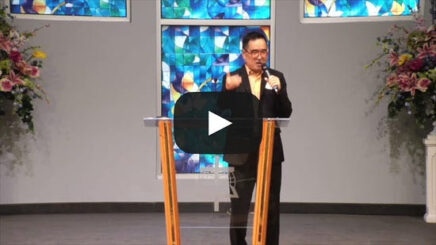
Watch this video of Scott Wilson talk about the book (cf. extended version):
What caught my attention with Steering Through Chaos were these things:
(1) Scott quotes so many other people in this book, like a synthesis of all that he’s gleaned from other church leaders! I didn’t fact-check, but the acknowledgements section would be dozens of pages if he were to list all the names of leaders mentioned in the book!
(2) Scott shares his own story of going through a massive church transition, that included relocation, building campaign, leadership transitions, personal challenges, and managing healthy relationships. This narrative approach sure makes the underlying principles much more understandable and practical. Yes, this book covers a lot of ground.
(3) The book speaks to personal health. In an early chapter, the author lists a stress chart to honestly show the reality of what changes do to people, and doesn’t ignore or overlook this in the name of being “spiritual” or bieng a “leader.” Being emotionally healthy is vital for short-term and long-term success, for both personal and organizational health. And, it means getting the help you need, whether a life coach, counselor, or whatever. I’m glad this is weaved in throughout the book.
(4) I love the way Scott has learned to pastor in that relational kind of way while still being a visionary leader. It’s not easy to keep moving towards finishing a task or reaching a goal, while also bringing people along. The book describes how Scott met personally with a hundred key leaders in preparation for a big church change, listening to their concerns and asking for their prayers. In similar fashion, big decisions are made with a unanimous concensus of the leadership team. Not easy to do in a church of any size, much less a larger kind of church with attendance in the thousands. I don’t think he wrote it, but the concept of “leaving no one behind” is very attractive to me and I think that’s the way it ought to be.
(5) Being spiritual. Unlike other leadership endeavors, the work of church leadership is a spiritual one. So the book weaves in the spiritual dependency & discerning aspects along with the personal, relational. and organizational aspects too. I prefer to say it’s holistic, though you could say comprehensive, too.
If gathering the elites are exclusive
There’s a place for events being exclusive and invite-only. There’s a place to celebrate excellence. Yet when done in the public eye like a conference that’s priced beyond the pay grade of normal people, what kind of an impact does that have, especially for the next generation? This Business Week article describes an aspect of a possible dynamic between generations:
TED was born in 1984 as an underground dinner party for information designer Richard Saul Wurman and friends from the worlds of technology, entertainment, and design. This year, 1,500 people paid $6,000 each to attend the modern version of TED, held in the Long Beach (Calif.) Performing Arts Center from Feb. 9-13. Five hundred more paid $3,750 to watch a simulcast… Twenty-six years in, TED is showing signs of age. One of the most conspicuous is the makeup of attendees, diverse only in that TED appears to attract a white man from every street in Silicon Valley. … conferences… have struggled with similar issues, like: how to get more inclusive without sacrificing intimacy. How to keep loyalists happy while attracting a younger crowd closer to the headwaters of innovation. And how to get that younger crowd to pay six grand.
For a conference junkie like me, I do wonder out loud… (just a tad ironic that I’m returning from a conference, and #sxsw, the conference of conferences is happening right now in Austin) how can people get access? Are these events a good use of money? Words like “stewardship” are seeping into our venacular. Will people travel to gather for a different kind of event when there isn’t that formulaic production of keynotes and workshops? [update] cf. a set of Purpose-Driven regional events for small group leaders that describes itself as “a radical new approach to conferences”; a whole book about this concept= Conferences and Conventions: A Global Industry (Events Management), by Tony Rogers, has a chapter titled “The economics of conferences and conventions”
next gen Southeast Asian Leaders
At SEALS: Southeast Asian Leadership Summit 2010 in San Jose, a conference of 140+ next generation Southeast Asian ministry leaders. Watch the main sessions as they’re being live-streamed. The organizer’s hospitality has been amazing — so encouraged to see the enthusiasm and heart of young leaders eager for God’s glory and caring for all peoples. Here’s a snapshot of who’s here:

I’ll be facilitating a workshop about social media, sort of a different angle than most of the other workshops that are addressing specific ministry issues. So my workshop, titled “Wielding online tools for connecting and collaborating,” is more about online tools & web apps and how they can be used for ministry. My slides are online [created entirely using Google Docs]. Based on discussions that flow from the 2 sessions of the same workshop, I’ll update this post with more links & references.
[updated] Links to Resources mentioned in workshop:
- video: social media revolution
- Top 100 church blogs via churchrelevance.com
- How to get a domained website = domain name (e.g. Godaddy or Name.com) + web hosting (e.g. dreamhost.com or bluehost.com) + content management system (CMS; e.g. WordPress, Joomla, Drupal)
- free live-streaming web apps: ustream.tv & livestream.com
-
- CD’s music : myspace.com/cuzcad + twitter @heyitscd + youtube.com/cd517
- Kai’s food videos at youtube.com/ltkman
- And, we launched The Khmer Palate in class! On twitter @thekhmerpalate and blog thekhmerpalate.wordpress.com and youtube.com/missnget
Practical steps for racial and cultural reconciliation
An important seminar on race and faith was recently hosted at New Life Fellowship, a multi-ethnic church in Queens, New York City. The seminar video, Next Steps in Racial and Cultural Reconciliation, is now available online.
The seminar was led by Pastor Pete Scazzero & Dr. Soong-Chan Rah, deepening an understanding of the complexity & depth of bridging racial & cultural barriers within our communities. The seminar also provide practical, do-able steps for each person to take to make reconciliation a reality.
About the seminar topic, Pete Scazzero wrote in “Bridging Barriers: Next Steps for New Life Fellowship Church” ::
I soon realized that our evangelical discipleship/spiritual formation model was too superficial to bring about the kind of in-depth transformation we would need to live in authentic community. … Asians, with their rich legacy of love for education, had great difficulty in embracing high-school dropouts who now attended our youth group … We also had to consistently remind immigrants that they were now part of the American church.
And Drew Hyun wrote in “Thoughts on our Reconciliation Seminar“:
1) The Conversation of Reconciliation Needs to Address Personal AND Corporate Injustices/Sins; 2) There’s an Illusion that Building a Diverse Church Family will be Easy (or Formulaic); 3) Understanding (or at Least Trying to Understand) The Black Experience is Fundamental to Making Progress in the Area of Reconciliation; 4) I Have to Take Personal Responsibility; 5) We Need to Talk
Thanks to Drew Hyun for the video link.
Reading about this topic, again, it makes me wonder just how much these racial and cultural barriers stay embedded because some people deny their existence and sincerely believe that we live in a post-racial American society.
Lausanne Conversation Gatherings on issues facing the global church
The Third Lausanne Congress on World Evangelization is taking place in South Africa this October. While most of us won’t be able to travel to Cape Town, South Africa, to attend this Congress (which seems to be a much weightier word than “conference”), there are 2 ways for people to participate: (1) the Conversation Gatherings, (2) the GlobalLink. Looks like an impressive list of church leaders are meeting up.

The Conversation Gatherings are local FREE 2-hour events and anyone is welcomed to participate. Please do register online so they can know you’re coming. These are 5 dates scheduled in Southern California (see the list for all 12 locations):
18 March 2010: Azusa Pacific University (Azusa)
Topics: Future of the Global Church; Race, Power, and Evangelism
Panelists: Brenda Salter McNeil, Brad Lomenick, Nikki Toyama-Szeto, Wes Stafford, Joni Eareckson Tada
30 March 2010: Fuller Theological Seminary (Pasadena)
Topics: Culture Making — The Role of Christians in the World
Panelists: Jim Belcher, Doug Birdsall, Margaret Feinberg, Michael S. Horton, Richard Mouw, Kara Eckmann Powell, Rich Van Pelt
14 April 2010: Generate at Crossroads Church (Corona)
Topics: Christians and Their Impact on Culture, The Future of the Global Church
Panelists: Charles Lee (moderator), Tony Wood, Jeff Shinabarger, Margaret Feinberg, Rich Van Pelt
14 April 2010: NewSong Community Church (Irvine)

10 June 2010: Saddleback Community Church (Lake Forest)
The second way to get engaged in these global issues is thru GlobalLink. Each GlobaLink site will have some live-streaming video of Cape Town events and additional conference materials. No locations have been announced yet, far as I can tell.
[update] Also see Charles Lee’s 12 Cities 12 Conversations (A New World Church Conversation) which points to a whole website & blog www.12cities12conversations.com